
Foard VINELink Became IVSS
Texas county notifications moved from VINE and VINELink to Texas IVSS-Counties on September 1, 2025. The Texas Attorney General's transition page identifies the change, alert categories, and support route. Old VINE registrations migrated, but migrated users must update their password at first login.
The transition notice shown below is the current starting point for someone who still searches the familiar VINELink name.
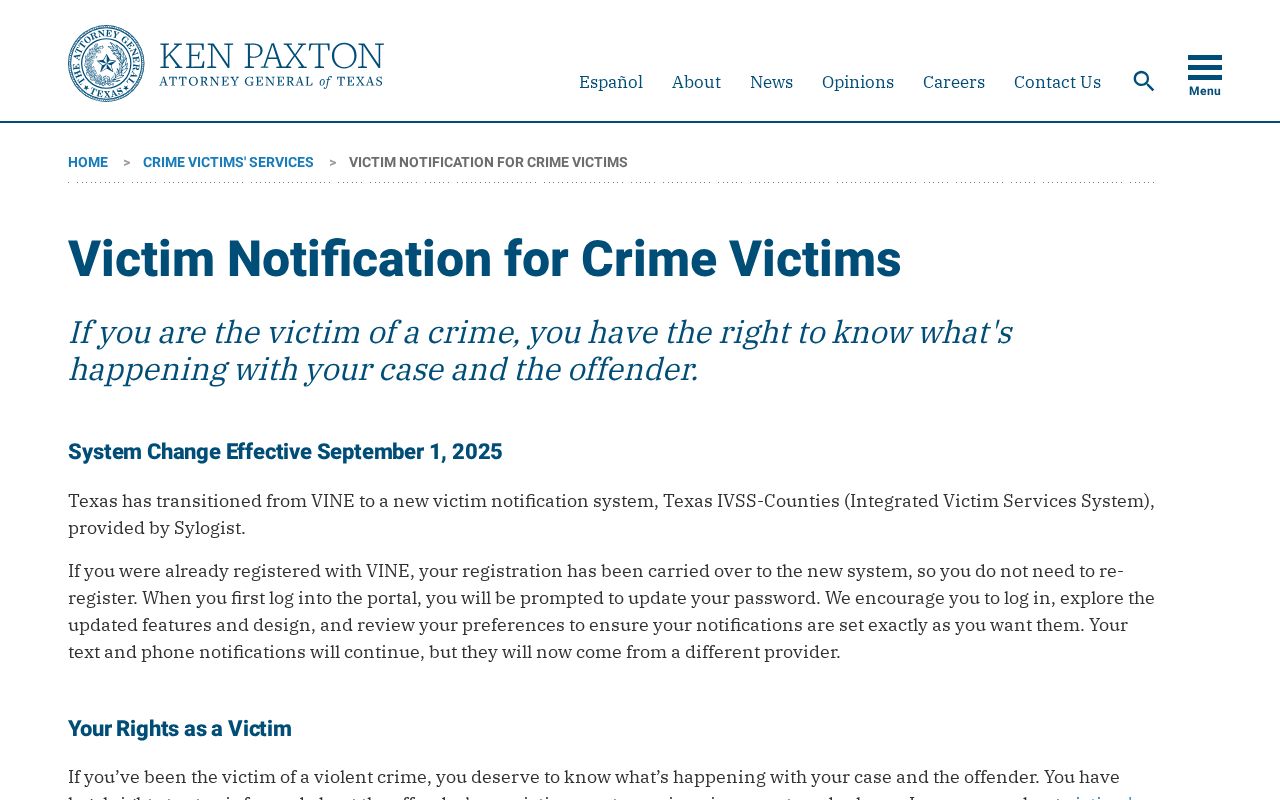
The former name remains a useful search phrase, not the name of today's county portal. Current county custody uses IVSS-Counties. TDCJ imprisonment and parole use a separate TDCJ IVSS portal. Selecting the wrong portal can produce a missing result even when the identity is correct.
Search One Foard County Inmate
The county portal allows a public offender-in-custody search without first creating an account. Foard participation was not confirmed by the reviewed sources. Because Foard detainees have historically been housed outside the county, a receiving jail may hold and report the person. A search should never assume that selecting Foard alone reaches that jail's data.
- Open Texas IVSS-Counties and choose the public custody search.
- Enter the exact name and any booking or agency identifier available. Use date of birth or other disambiguation shown by the live interface.
- Check whether Foard County appears as a participating source. If participation or the right agency is unclear, call IVSS support at 866-268-8959.
- Compare each match with the booking or court record. Similar names are not enough.
- If no match appears, ask the Foard County Sheriff which out-of-county jail received the person, then search or contact that custodian.
- If a release notice arrives, preserve it and obtain the release date, type, authority, and destination from the Sheriff and receiving jail.
The current county portal landing screen below shows the service that replaced the public Texas county VINE route.
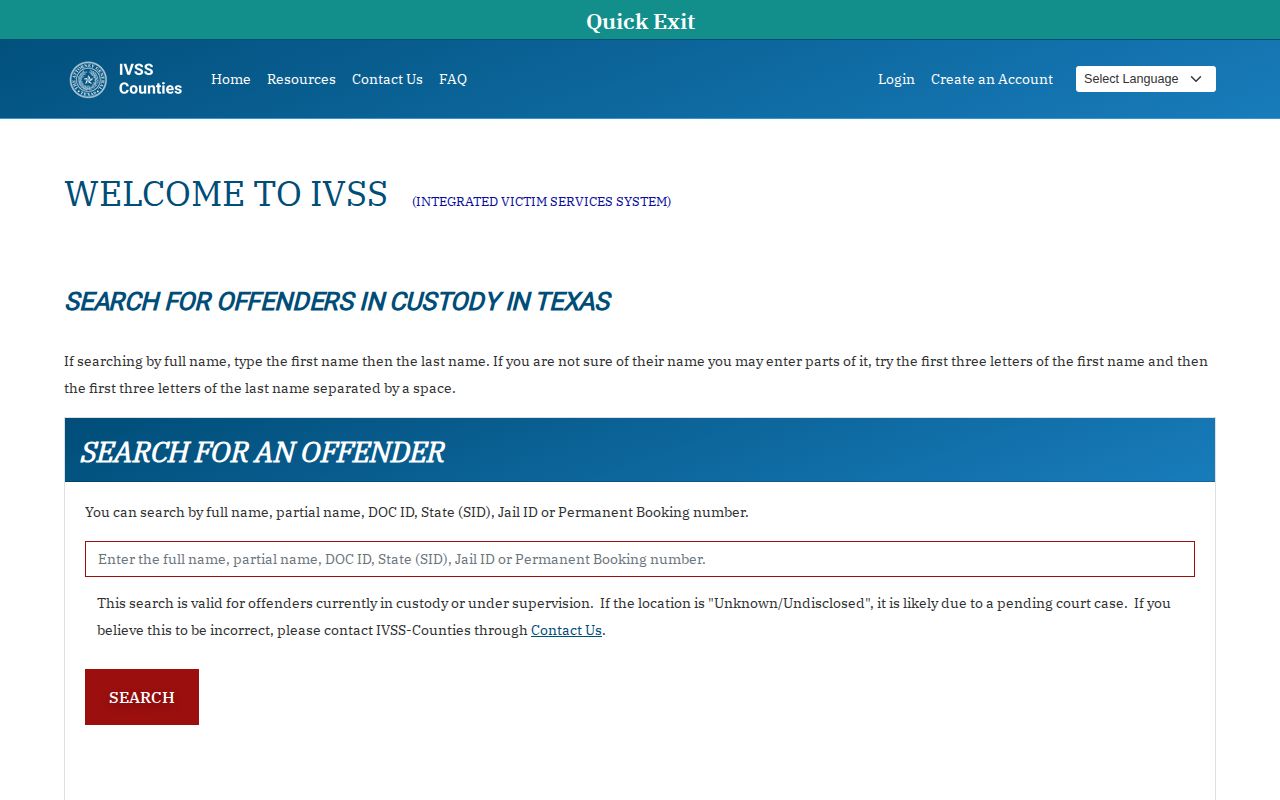
A match describes current custody information. A missing name can result from release, transfer, nonparticipation, spelling, delayed data, or the wrong county. It does not by itself prove release.
What Foard IVSS Shows
The current Attorney General description supports a custody search and registered notices for booking, release, court change, death in custody, escape, and transfer to TDCJ. It does not promise that a released profile remains available as a public archive. Research also did not verify a stable public field for release reason or a retention window.
| Information | Current use | Important limit |
|---|---|---|
| Identity and custody match | Distinguishes the selected person | Must be checked against a booking or case record |
| Current county custody | Shows a participating agency's present report | Foard participation and receiving-jail coverage require confirmation |
| Release alert | Notifies a registered user of a custody change | Does not replace the full release record |
| Transfer alert | Signals movement, including transfer to TDCJ | A transfer is not community release |
| Court-change alert | Provides a notice tied to the registered case | The clerk's docket is the formal court source |
Under the old VINE system, the public record could include custody status, location, scheduled release, charges, bail, and court events. Those historical fields should not be promised for IVSS. The current release alert confirms that the service received a change, while the custodian's record confirms what happened.
Note: Capture the alert time, but request the agency's event time because a notification may follow the actual custody change.
Register a Foard Release Alert
IVSS-Counties accounts can associate a user with an offender or case and deliver notices by telephone, text, or email. The account also allows contact updates, preferred contact hours or blackout dates, pauses, and notification-history review. Use the labels shown in the live portal because screen wording can change.
- Search for the specific person and verify the matching custody record.
- Choose the registration or follow control presented for that record.
- Create an account or sign in. Migrated VINE users should reset their password when prompted.
- Add the desired call, text, or email destination and complete the verification requested by the portal.
- Select the available event and contact preferences, then save or confirm the subscription.
- Sign in again to test access, review the saved person, and keep the 866-268-8959 support number.
The old Texas VINE brochure told callers to create a four-digit PIN and enter that PIN plus the pound sign to acknowledge a call. Unanswered calls could repeat. That process is historical, from before September 1, 2025. The current source describes password-based accounts and preference management, not a current four-digit PIN step.
Alerts should supplement direct checks. Contact details can fail, messages can be delayed, and the person can move between systems. Keep the account current and do not depend on one delivery method for a time-sensitive release event.
Notification history can help reconstruct when IVSS sent a message, but it is not the same as jail event history. Save the message, profile identity, and event label. Then ask the custodian for its booking number and recorded event time. If an account shows the wrong person, remove the association and report the mismatch through support.
Telephone, text, and email destinations should belong to the registered user and remain accessible. Preferred hours or blackout settings can affect when a notice arrives. Review those choices before an expected event. A password reset is especially important for an account migrated from old VINE because the current system is account based.
Foard Prison Alerts Use TDCJ IVSS
A Foard conviction that leads to a state prison sentence leaves the county-notification route. TDCJ maintains its own IVSS system for prison and parole events. The official TDCJ IVSS portal is separate from IVSS-Counties, even though both use the IVSS name.
The state portal screenshot below helps distinguish it from the county-custody landing page.
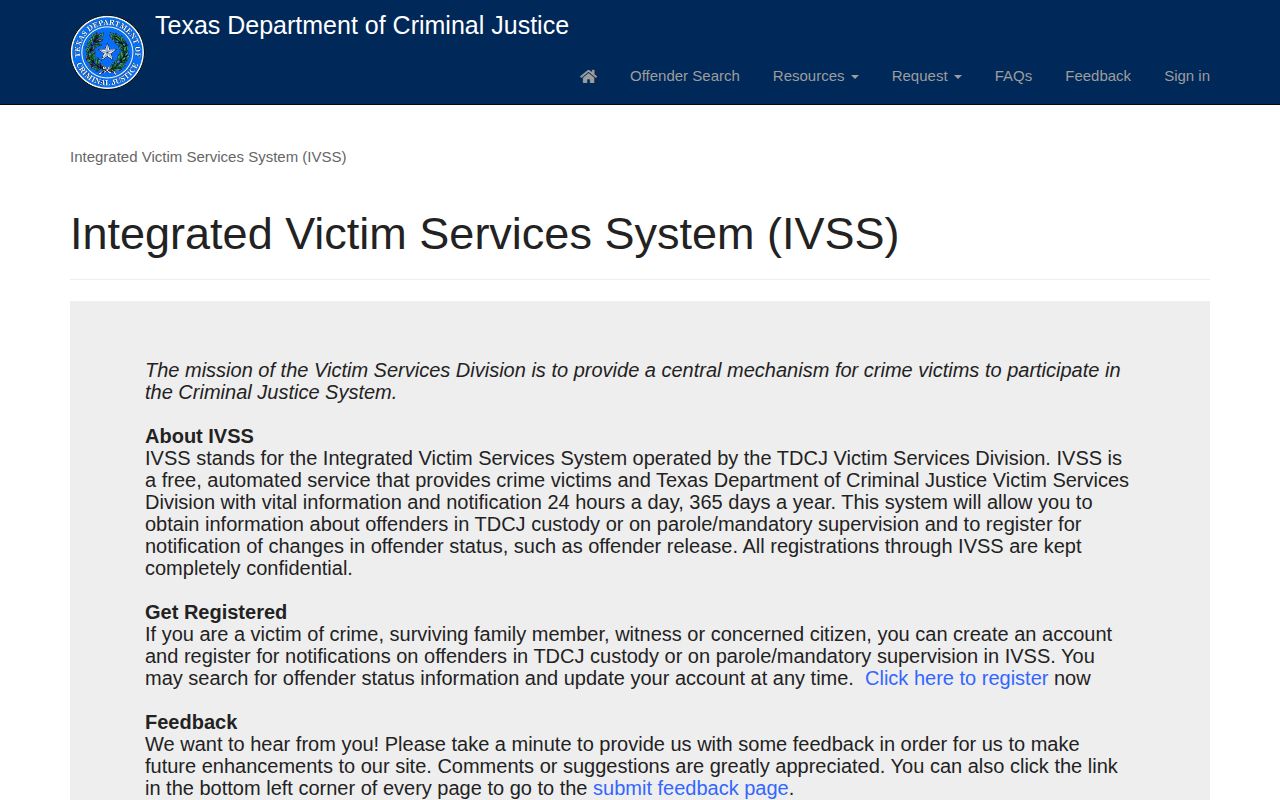
For a current TDCJ prisoner, the public offender search can help identify the record and projected-release information. That search is limited to people now incarcerated in TDCJ. Once the person leaves, use the IVSS notice, TDCJ release or discharge record, and Wichita Falls District Parole Office if supervision begins.
Do not treat a projected date as an alert or completed release. It may change through good-time decisions, Board action, programs, detainers, court orders, or processing. The release record remains the stronger proof.
TDCJ alerts should not be mixed with county booking or court-change alerts. A transfer from a receiving jail to TDCJ ends one custodian's hold and begins another. Use the state prisoner number in the TDCJ portal and retain the Foard booking or cause number for the county record. This linked chain explains the move without calling it a community release.
Foard VINELink Coverage by Custodian
No single notification portal covers every person connected to Foard County. The arrest location, conviction county, and current custodian can point to different tools. Federal and immigration routes sit outside Texas IVSS.
| Custody route | Search or alert system | Release confirmation |
|---|---|---|
| Foard or receiving county jail | IVSS-Counties if the agency participates | Sheriff and receiving-jail release record |
| TDCJ prison or parole | Separate TDCJ IVSS | TDCJ release/discharge record and DPO when supervised |
| Federal Bureau of Prisons | BOP Inmate Locator, not IVSS | Past release date and RELEASED status, checked with court records |
| ICE | ICE Online Detainee Locator, not IVSS | ICE/ERO or immigration case documentation |
| U.S. Marshals pretrial custody | No public USMS inmate locator | Federal court order and holding facility |
The BOP locator can show a past release date for many federal prisoners. ICE's locator is designed for current and recent immigration custody, not a permanent release archive. USMS prisoners may be held in contract facilities, so the federal docket and known holding jail are the practical route.
Registry information is separate too. The Texas DPS public sex-offender registry covers only people with a Chapter 62 registration duty. It is not a VINE successor, general release feed, or source for every released person. A registry match may show a post-release duty, while IVSS reports a custody or notification event. Label each record by its purpose and agency.
Confirm a Foard Release Alert
A county alert should lead to two calls: the Foard County Sheriff and the actual receiving jail. Ask whether the event was community release, transfer, bond release, court-ordered release, or movement to another custodian. Request the physical exit time and destination. Foard's out-of-county housing history makes that receiving-jail step central.
For a state-prison alert, confirm through TDCJ release processing or a release/discharge record. If the person begins parole or mandatory supervision, contact the Wichita Falls District Parole Office. For a court event, use the Foard County or District Clerk record according to the case level.
The broader Foard County released-inmate search explains how to request a local release record when the alert is absent or unclear. An alert is useful for speed. The source record is better for date, authority, release type, and transfer destination.
If no portal supplies the history, request the release record in writing. For a Foard arrest, give the Sheriff a name, birth date if known, booking date range, arresting agency, and preferred electronic format. Ask who held the person and request booking number, housing facility, release date and time, release authority or type, and transfer destination. For TDCJ, direct a focused historical request to its public-information office.
The county request should also distinguish a release from a transfer. If the person left the receiving jail in another agency's custody, ask for that agency's name and the transfer time. Then continue with the next custodian. This creates a traceable path from Foard arrest through each holding site instead of treating the first alert as the end of custody.
For an alert tied to a court change, obtain the docket entry and signed order from the correct clerk. A court order may authorize release before jail staff complete processing. Pairing the judicial record with the custodian's exit time shows both legal authority and physical departure. It also resolves cases where the notification label is too short to explain the event.
Note: Never infer community release from a vanished profile; movement to another jail or TDCJ can produce the same search result.